Source purple clay mini pinch bowl for tea, decor, and crafts
Compare 30 listings for the purple clay mini pinch bowl from verified Chinese manufacturers. Buyers can evaluate material options, customization availability, and pricing to find the right supplier for daily use or specialized projects.
Key considerations
Products List




Comprehensive Sourcing Guide
Strategic Sourcing Guide for Purple Clay Mini Pinch Bowls
The global market for specialized ceramic tableware continues to expand, driven by a growing consumer preference for artisanal, eco-friendly, and health-conscious dining experiences. Among the most sought-after items in this sector are mini pinch bowls, particularly those crafted from purple clay, a material renowned for its unique thermal properties and aesthetic depth. For procurement professionals, sourcing these items requires a nuanced understanding of material science, manufacturing standards, and supply chain logistics. This guide provides a comprehensive framework for evaluating potential suppliers and ensuring the acquisition of high-quality purple clay mini pinch bowls that meet rigorous B2B standards.
Material Composition and Technical Specifications
The primary differentiator for purple clay mini pinch bowls lies in the raw material itself. While the supplied data indicates a variety of materials including glass, ceramic, porcelain, and wood, the specific demand for "purple clay" necessitates a focus on high-quality ceramic and porcelain compositions. In the context of B2B procurement, the distinction between standard ceramic and specialized purple clay (often associated with Zisha or similar clay types) is critical. The supplied facts highlight that materials can range from "Ceramics" and "Porcelain" to specific raw material classifications like "Porcelain."
When evaluating a supplier, buyers must verify the specific clay composition. The technical specifications provided in the reference data offer a template for what to expect in a compliant product listing. For instance, dimensions are often listed with precision, such as "6.84.8cm" or "10.3cm5cm," and capacities are clearly defined, ranging from "170ml" to "350ml." A mini pinch bowl typically falls within the lower end of this capacity spectrum. Buyers should demand that suppliers explicitly state the raw material source and composition, ensuring it aligns with the thermal and chemical properties expected of purple clay.
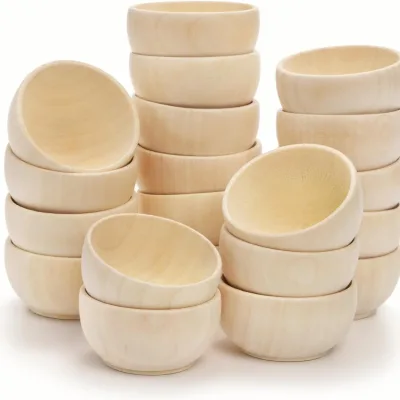
Furthermore, the manufacturing technique plays a significant role in the final product's integrity. The data notes that "Handmade" methods and "Glazed" techniques are common attributes for high-end ceramic items. A genuine purple clay bowl often features a specific glazing process that enhances the clay's natural color while ensuring food safety. The "Polished" technique mentioned in the wood bowl data suggests that surface finishing is a key consideration across material types, and for clay, this translates to a smooth, non-porous finish that is essential for daily use.
Compliance, Certification, and Food Safety Standards
In the B2B food service and retail sectors, compliance is not merely a formality but a prerequisite for market entry. The supplied facts explicitly mention "FDA" and "SGS" certifications as key attributes for ceramic and porcelain products. When sourcing purple clay mini pinch bowls, buyers must insist on documentation proving that the finished product meets these rigorous safety standards. The FDA certification indicates compliance with United States food contact regulations, while SGS provides an independent verification of quality and safety.
The data also highlights "Eco-Friendly" and "Non-Toxic" as critical product features. For purple clay, this implies that the clay body and any glazes used must be free from heavy metals such as lead and cadmium, which can leach into food. Buyers should verify that the supplier's production process adheres to international standards for non-toxic materials. The "Health Care" function listed in the attributes suggests that the material may offer additional benefits, such as improved water retention or thermal stability, but these claims must be substantiated by the supplier's test results.
It is important to note that while the data lists "FDA, SGS" as available certifications, buyers cannot assume every listed product automatically satisfies these requirements without verification. The procurement strategy must include a request for current, valid certificates for the specific batch or model being ordered. Additionally, the "Standard Export Carton" packaging mentioned in the data is a good indicator of a supplier's attention to logistics, but it does not replace the need for material safety testing.
Cost Drivers and Pricing Structures
Understanding the cost structure of purple clay mini pinch bowls is essential for budgeting and margin analysis. The observed price range in the supplied data spans from $0.20 to $5.00 USD. This wide variance suggests that factors such as material quality, manufacturing complexity, and order volume significantly influence the final unit cost. Handmade items, as noted in the attributes, generally command a higher price point due to the labor-intensive nature of the production process compared to mass-produced, machine-made alternatives.
The Minimum Order Quantity (MOQ) is another critical cost driver. The observed MOQ range is between 100 and 10,000 units. Suppliers with lower MOQs (e.g., 100-500 pieces) may charge a premium per unit to cover setup costs, while those requiring higher volumes (e.g., 5,000+ pieces) can offer more competitive pricing. The data explicitly mentions an MOQ of "500Pcs" for certain ceramic items, which serves as a benchmark for mid-sized orders. Buyers should negotiate based on their volume requirements, keeping in mind that customizations, such as specific colors or logos, may increase the MOQ or unit price.
Customization is a significant factor in cost. The data confirms that "Customization" and "Customized" options are available, including OEM/ODM services. Custom molds, unique glazing colors (such as the specific "Blue" mentioned in the data, though purple is the target), and specialized packaging will all add to the overall cost. Buyers must balance the desire for unique branding with the economic realities of production runs.
Typical Applications and Market Positioning
Purple clay mini pinch bowls are versatile products with applications ranging from daily household use to specialized culinary and spa treatments. The supplied data lists "Daily Use" as a primary application, indicating that these bowls are suitable for serving soups, sauces, or small portions of food in a home or restaurant setting. The "Thermostability" attribute suggests that these bowls can withstand temperature fluctuations, making them ideal for serving hot dishes directly from the stove or oven.
Beyond food service, the "Health Care" and "Eco-Friendly" attributes point to potential use in wellness and spa industries. Mini pinch bowls are often used for applying masks, creams, or other topical treatments. The non-toxic and dishwasher-safe features ensure that the bowls can be easily sanitized and reused, which is a critical requirement for professional settings. The "Classic" style mentioned in the data suggests that these products appeal to a broad demographic that values traditional aesthetics alongside modern functionality.
The "Home" application is also highlighted, indicating that these bowls are marketed for personal dining and decorative purposes. The combination of "Handmade" craftsmanship and "Eco-Friendly" materials positions these products in the premium segment of the market, appealing to consumers who prioritize sustainability and artisanal quality over mass-produced goods.
Supplier Evaluation and Quality Control
Selecting the right supplier is the most critical step in the procurement process. Buyers should evaluate potential partners based on their ability to meet the specific technical and compliance requirements outlined in this guide. The data indicates that suppliers should be located in regions known for ceramic production, such as "Chazhou Guangdong, China" or "Shandong, China." These locations often have established supply chains and expertise in ceramic manufacturing.
Quality control measures must be rigorous. Buyers should verify that the supplier has a robust inspection process to ensure that every bowl meets the specified dimensions, such as "10.80cm*4.30cm" or "6.5Inch." The "Glazed" and "Polished" techniques must be applied consistently to avoid defects like cracks, chips, or uneven surfaces. The "Non-Disposable" attribute confirms that the product is built for durability, and buyers should test samples for resistance to chipping and thermal shock.
Furthermore, the "OEM/ODM: Accepted" status indicates that suppliers are willing to work with buyers on custom designs. However, this flexibility must be balanced with strict quality assurance protocols. Buyers should request samples of previous work to assess the consistency of the glazing and the accuracy of the dimensions. The "Standard Export Carton" packaging is a positive sign, but buyers should also verify that the packaging is sufficient to prevent damage during transit, especially for fragile ceramic items.
Long-Term Procurement Considerations
Sourcing purple clay mini pinch bowls is not a one-time transaction but a long-term partnership that requires ongoing management. The "Customization" and "OEM/ODM" capabilities suggest that buyers may need to update designs or specifications over time. Suppliers must be flexible enough to accommodate these changes without compromising quality or lead times.
The "Eco-Friendly" nature of the product aligns with global sustainability trends, which are likely to intensify in the coming years. Buyers should ensure that their suppliers are committed to sustainable practices, such as using energy-efficient kilns and minimizing waste. The "FDA" and "SGS" certifications should be reviewed annually to ensure they remain valid and up-to-date.
Finally, the "Lead time" and "MOQ" dynamics must be managed carefully. While the data does not provide specific lead times, buyers should establish clear expectations with suppliers regarding production schedules. The ability to scale production up or down based on market demand is crucial for maintaining a healthy inventory level without overstocking. By focusing on these long-term considerations, buyers can build a resilient supply chain that delivers high-quality purple clay mini pinch bowls consistently.
Comparative Analysis of Product Attributes
To assist in the decision-making process, the following table summarizes key attributes observed in the supplied data that are relevant to sourcing purple clay mini pinch bowls. This comparison highlights the variability in specifications and helps buyers identify the specific requirements they need to verify with suppliers.
| Attribute Category | Observed Data Points | Relevance to Purple Clay Sourcing |
|---|---|---|
| Material | Glass, Ceramic & Porcelain, Ceramics, Porcelain, Wood | Must verify "Ceramics" or "Porcelain" with specific purple clay composition. |
| Certification | FDA, SGS | Essential for food safety; must be current and valid for the specific batch. |
| Dimensions | 6.84.8cm, 10.3cm5cm, 10.80cm*4.30cm, 6.5Inch | Mini pinch bowls typically fall in the smaller range (e.g., 6-10cm). |
| Capacity | 170ml, 175ml, 350ml | Mini bowls usually range from 100ml to 200ml; verify specific capacity. |
| Technique | Handmade, Glazed, Polished | Handmade and Glazed are critical for authenticity and finish quality. |
| MOQ | 100-10000, 500Pcs | Expect MOQs around 500 for custom items; negotiate based on volume. |
| Packaging | 1piece/OPP, 500PCS/Carton, Standard Export Carton | Ensure packaging protects fragile ceramic items during shipping. |
| Features | Eco-Friendly, Non-Toxic, Dishwasher Safe, Thermostability | Must confirm all features are present for food and spa applications. |
By adhering to the guidelines and considerations outlined in this guide, procurement professionals can effectively navigate the complexities of sourcing purple clay mini pinch bowls. The focus on verified specifications, rigorous compliance checks, and strategic supplier evaluation ensures that the final products meet the highest standards of quality and safety, ultimately delivering value to the end consumer.
FAQs
What certifications are required for purple clay mini pinch bowls?
FDA and SGS certifications are required to ensure food safety and quality compliance. These documents verify that the ceramic or porcelain materials are non-toxic and free from harmful heavy metals like lead.
How is the capacity of mini pinch bowls typically specified?
Capacity is specified in milliliters, with observed ranges from 170ml to 350ml for similar ceramic items. Buyers should verify exact volume dimensions to ensure suitability for their specific serving needs.
Can suppliers offer customization for purple clay mini pinch bowls?
Yes, customization and OEM services are available for these ceramic products. Buyers can request specific dimensions, colors, or branding while adhering to minimum order quantities that may vary by supplier.
What is the typical minimum order quantity for ceramic pinch bowls?
The minimum order quantity typically ranges from 100 to 10,000 units depending on the supplier. Some manufacturers set a baseline of 500 pieces for standard ceramic items to cover production setup costs.
Which materials are commonly used for these mini pinch bowls?
Common materials include ceramics, porcelain, and sometimes glass or wood for similar tableware. For purple clay bowls, high-quality ceramic or porcelain compositions are essential to match the desired thermal and aesthetic properties.
How are these bowls typically packaged for export?
Bows are typically packed in standard export cartons or OPP bags with 500 pieces per carton. This packaging ensures protection during transit while maintaining the integrity of the fragile ceramic or porcelain items.